The Story
The Story of the Villa and Garden
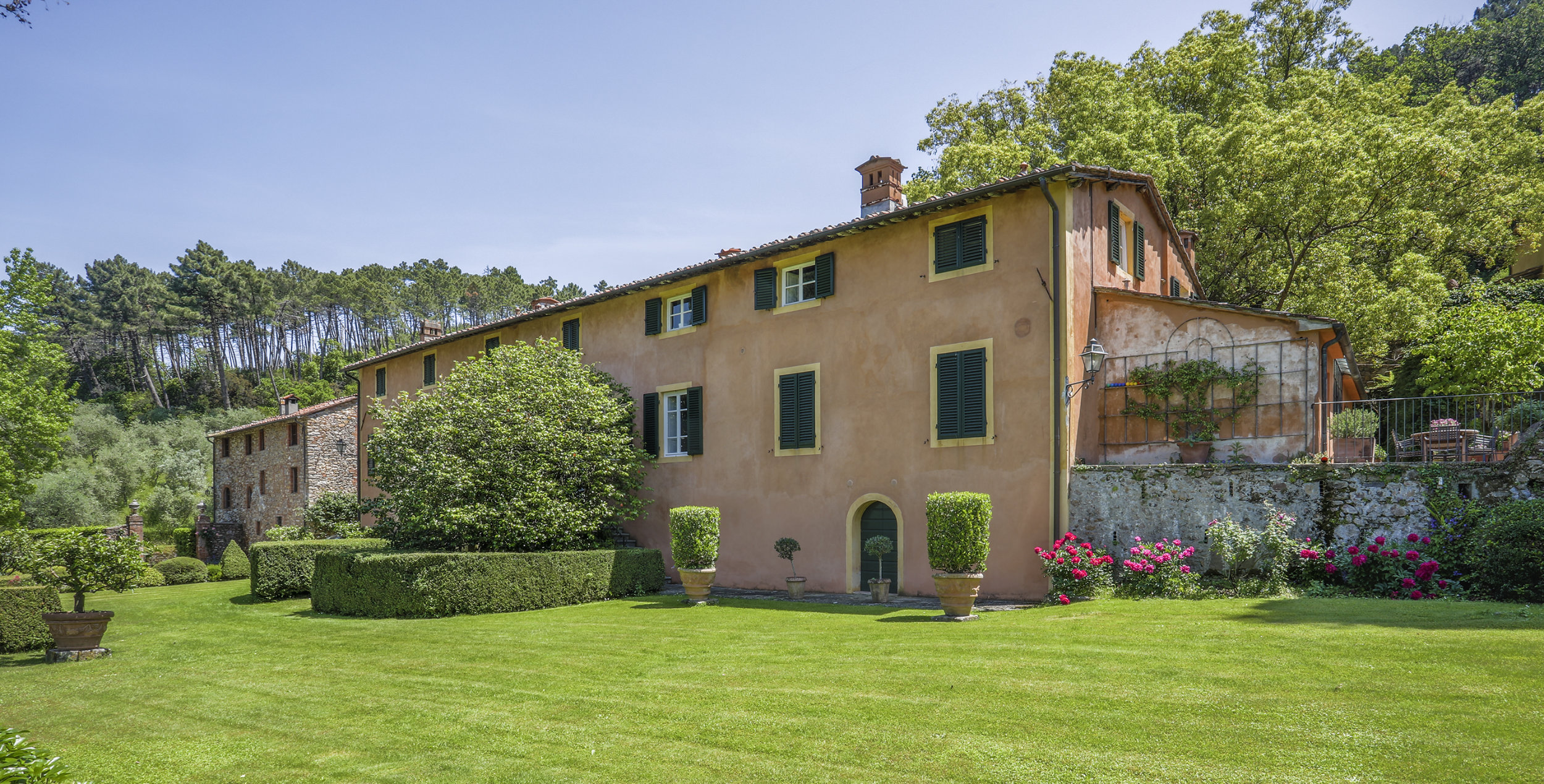
Villa Massei is a historic Tuscan villa located in the countryside near Lucca, surrounded by olive groves, cypress trees and gardens shaped over generations. Like many traditional villas in the region, the house has long been connected to the agricultural and cultural history of the Lucchese landscape.
History
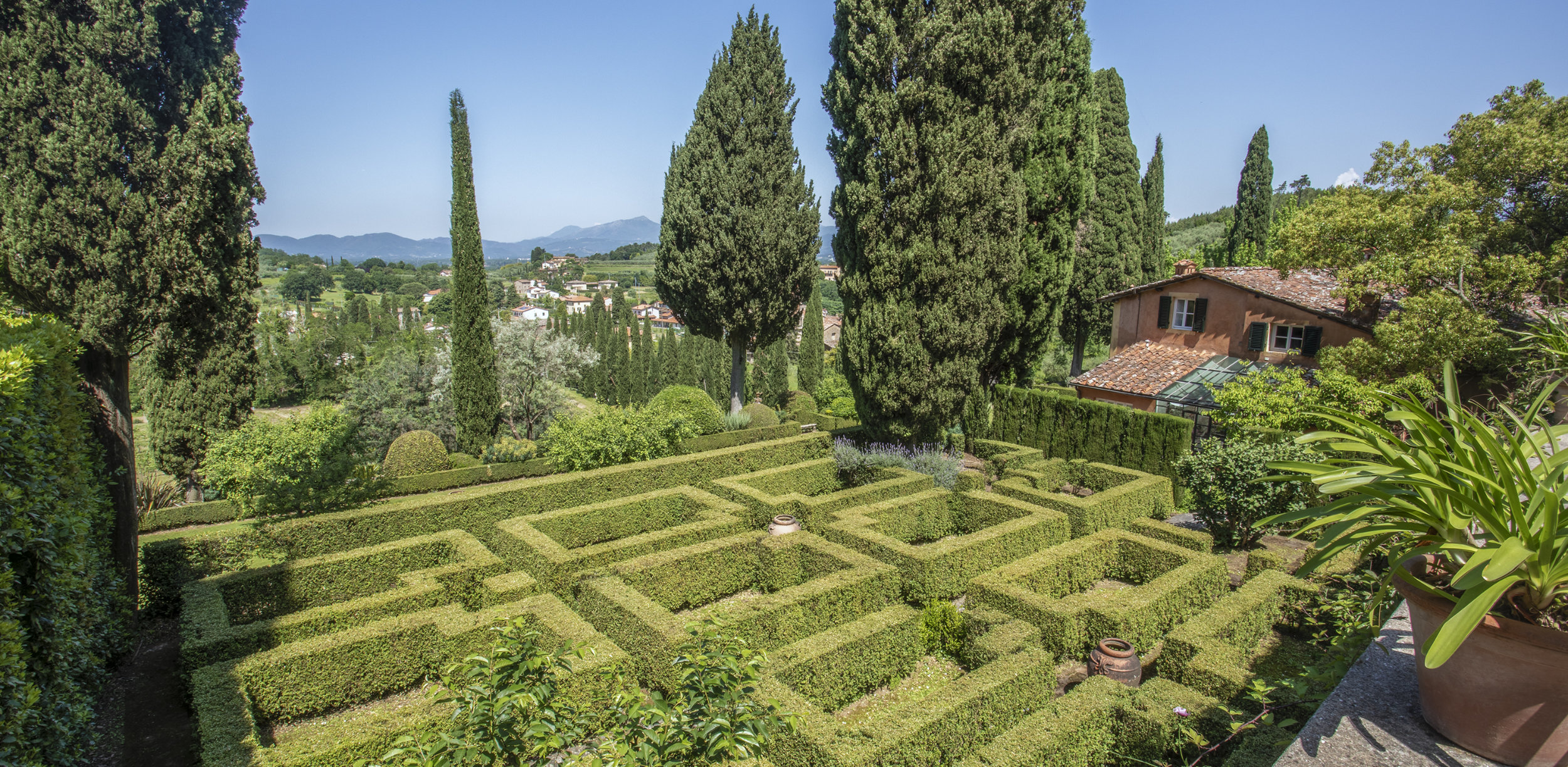
The house was built by the Counts Sinibaldi in about 1500, and was inherited by the Marchesi Massei in the 18th century, nephews of the Sinibaldi. In the 1950s the property was home to Lionel Fielden, founder of All India Radio and author of The Natural Bent. In 1981 an American couple bought the estate, and over the years have developed its garden, which "represents the best of old and new, an 'exquisite recreation' of a Renaissance garden, complete with lemon trees in terracotta pots".
Over time, the villa and its gardens have been carefully restored and refined, always with respect for their historic character and natural surroundings. Today, Villa Massei remains a private home and garden, a peaceful place where history, nature and contemporary garden design come together in harmony.
A Garden in Lucca
In 1981, the estate was acquired by two American garden enthusiasts who transformed the grounds over the following decades into the remarkable garden seen today. Inspired by the principles of Renaissance garden design, they created a landscape that beautifully combines historical character with contemporary vision.
The story of this transformation was documented in the book A Garden in Lucca by Paul Gervais (2000, Hyperion, New York), offering a unique insight into the garden's development and philosophy. Italian version Un Giardino a Lucca: la storia illustrata.
Vision
The garden is continuously refined, with a focus on balance: between structure and freedom, and between architecture and nature.
Sustainability and care
The garden is maintained with respect for its surroundings and the natural rhythm of the seasons. Thoughtful planting and careful stewardship ensure its vitality for the future.